 Karatdao
 verifiable credentials
Karat Network uses MPC to encrypt and verify social accounts, creating credentials that connect Web2 data with Web3 addresses. Users authorize their data through an OAuth-like flow, and smart contracts work with MPC to secure access control.
Last updated:
- Account Types
- The credential interface lists Discord, email, Twitter and Steam.
- Access Controls
- Smart contracts and MPC work together to secure access to data.
- Wallet Context
- Karat Network lists Sign in with Ethereum and links data ownership to an Ethereum wallet.
Why Does Karat Network Use MPC?
KaratDAO describes its middleware as using multi-party threshold cryptography and zero-knowledge technology. Its credential interface names MPC for social-account encryption and verification. Access control combines MPC with smart contracts.
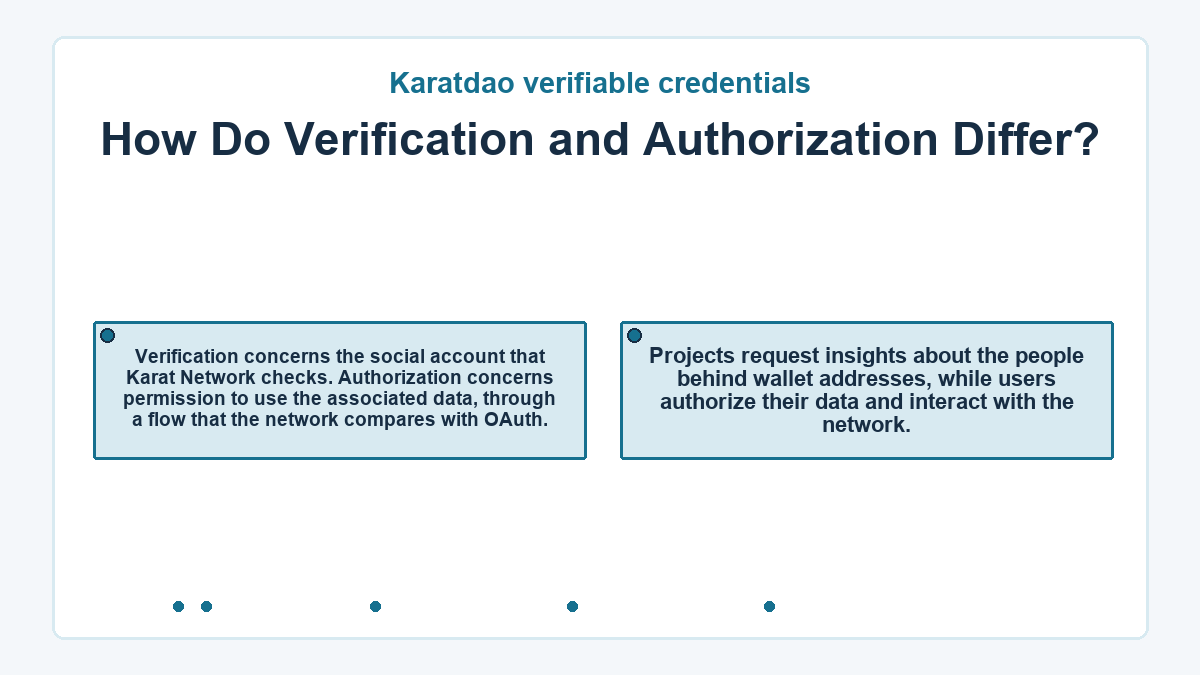
How Do Verification and Authorization Differ?
Verification concerns the social account that Karat Network checks. Authorization concerns permission to use the associated data, through a flow that the network compares with OAuth.
Projects request insights about the people behind wallet addresses, while users authorize their data and interact with the network.
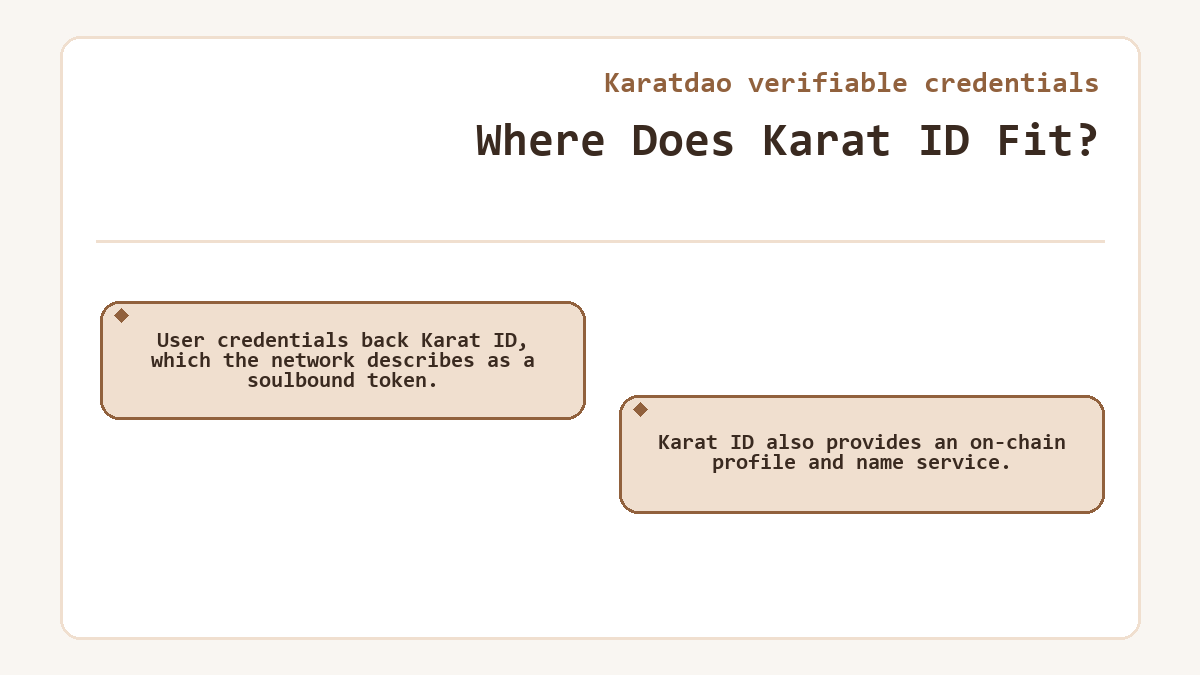
Where Does Karat ID Fit?
User credentials back Karat ID, which the network describes as a soulbound token. Karat ID also provides an on-chain profile and name service.
Does Discord Verification Satisfy an Email Requirement?
A user’s Discord verification does not satisfy a project’s requirement for verified email data in this hypothetical example.
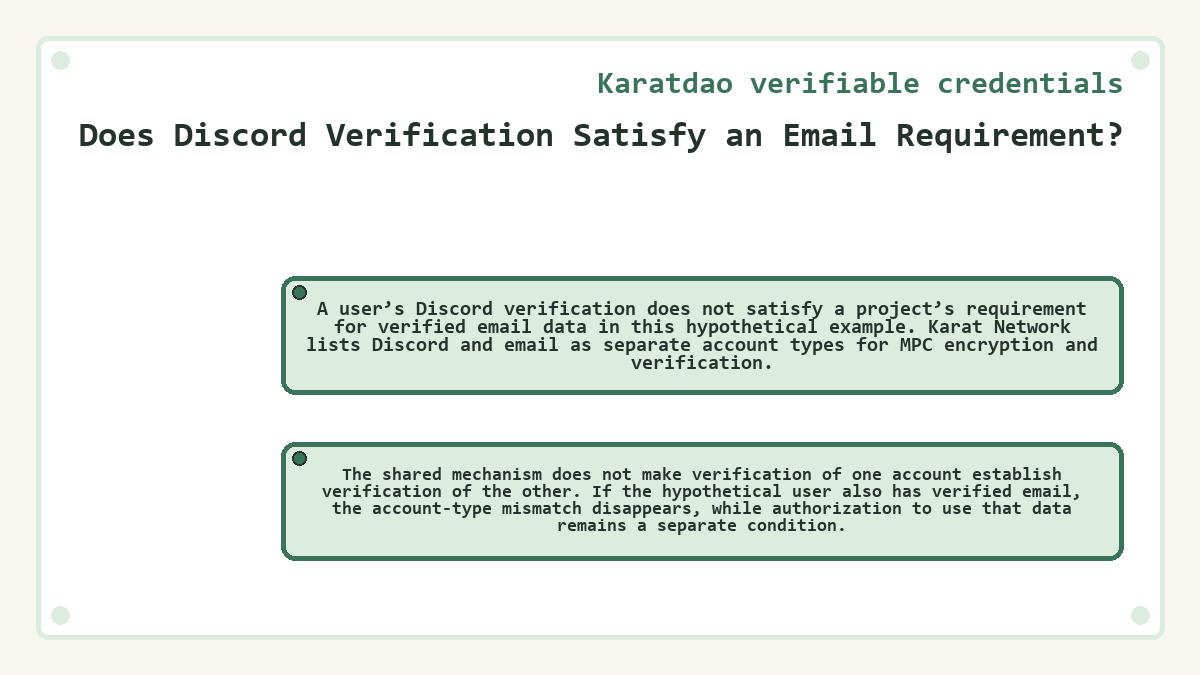
Karat Network lists Discord and email as separate account types for MPC encryption and verification. The shared mechanism does not make verification of one account establish verification of the other. If the hypothetical user also has verified email, the account-type mismatch disappears, while authorization to use that data remains a separate condition.